Modash
Introduction to Modash
Modash is a leading influencer marketing platform that helps e-commerce brands discover, track, and manage influencers. Designed to support influencer marketing efforts at scale, Modash provides advanced filtering, audience insights, and automated tracking for influencer campaigns.
While Modash had already achieved strong growth through SEO, both in editorial content and programmatic pages, the team wanted expert guidance to unlock the next stage of organic growth.
Modash partnered with us to refine its programmatic SEO strategy and editorial content approach, with the primary goal of driving more inbound deals from search.
The Challenge: Unlocking the Next Stage of SEO Growth
Key Problems Identified
Maximizing the potential of programmatic SEO pages
The /find-influencers directory was generating significant traffic but had more room for growth in rankings, relevance, and conversions.
The team lacked clarity on which high-leverage activities would move the needle the most.
Inefficient internal linking structure
Most programmatic pages had only one internal link pointing to them, limiting their visibility in search.
A lack of systematic internal linking meant pages weren’t benefiting from structured authority distribution.
Content experience gaps on programmatic pages
The cards displaying influencers lacked key data points searchers expected.
Pages weren’t fully optimized to meet search intent, affecting engagement and conversion rates.
Editorial content not fully aligned with buyer pain points
While Modash had a well-built blog, the strategy lacked deep insights from influencer marketing managers at e-commerce brands.
The team needed a content approach rooted in buyer pain points while still maintaining search competitiveness.
Business Goals
Increase search traffic to programmatic pages and blog content.
Drive more inbound deals from SEO, with a primary focus on programmatic pages and a secondary focus on the blog.
Improve search visibility & conversion rates by optimizing content experience and internal linking.
The Strategy: A User-Focused SEO Approach
To drive measurable growth, we eliminated generic SEO best practices and, using first principles thinking, focused only on high-impact activities with the greatest potential for traffic and conversion uplift.
Step 1: Prioritizing High-Converting Programmatic Pages
Using conversion data from Pipedrive, we analyzed which programmatic pages drove the most inbound deals.
88% of inbound deals from programmatic pages came from six key programmatic page types:
Country, Category (e.g., Find Beauty Influencers in Ireland)
Country, City (e.g., Find Influencers in Sydney)
Country (e.g., Find Influencers in the UK)
Platform, Country (e.g., Find YouTube Influencers in India)
Country, Micro (e.g., Find Micro-Influencers in China)
Category (e.g., Find Interior Design Influencers)
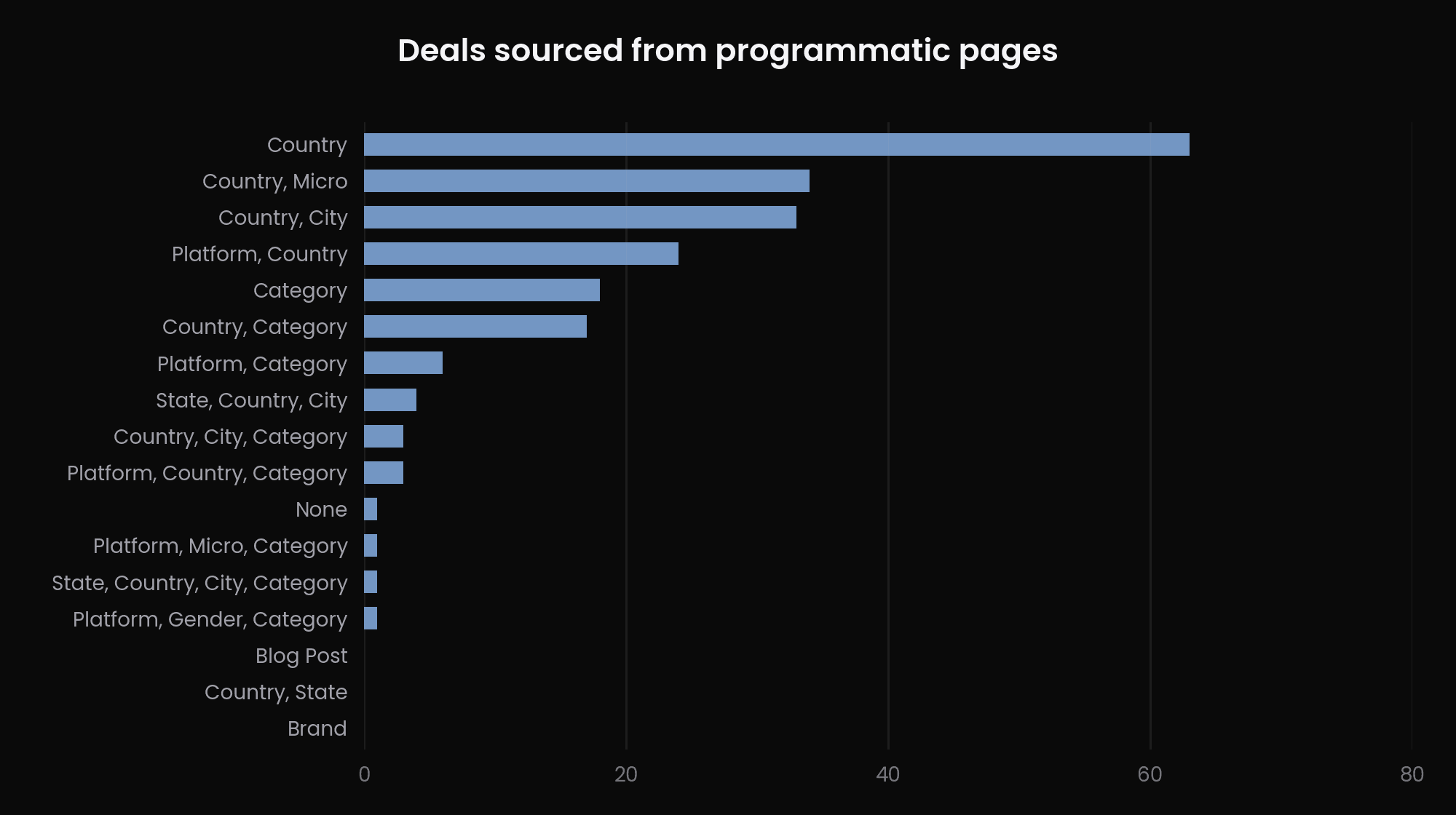
Inbound deals attributed to each programmatic page type.
Action taken:
Prioritized content updates for these high-converting page types.
Developed new pSEO pages aligned with high-value search queries.
Step 2: Systematic Internal Linking Overhaul
We redesigned the internal linking structure on each page to improve discoverability and rankings.
Action taken:
Built a hub-and-spoke model:
Main hub page (Find Influencers) → links to major categories (Platform, Category, Location).
First-level hub pages (e.g., Instagram Influencers) → links to second-level hubs (specific locations or niches).
Cross-linking between similar pages based on theme, platform, or geography.
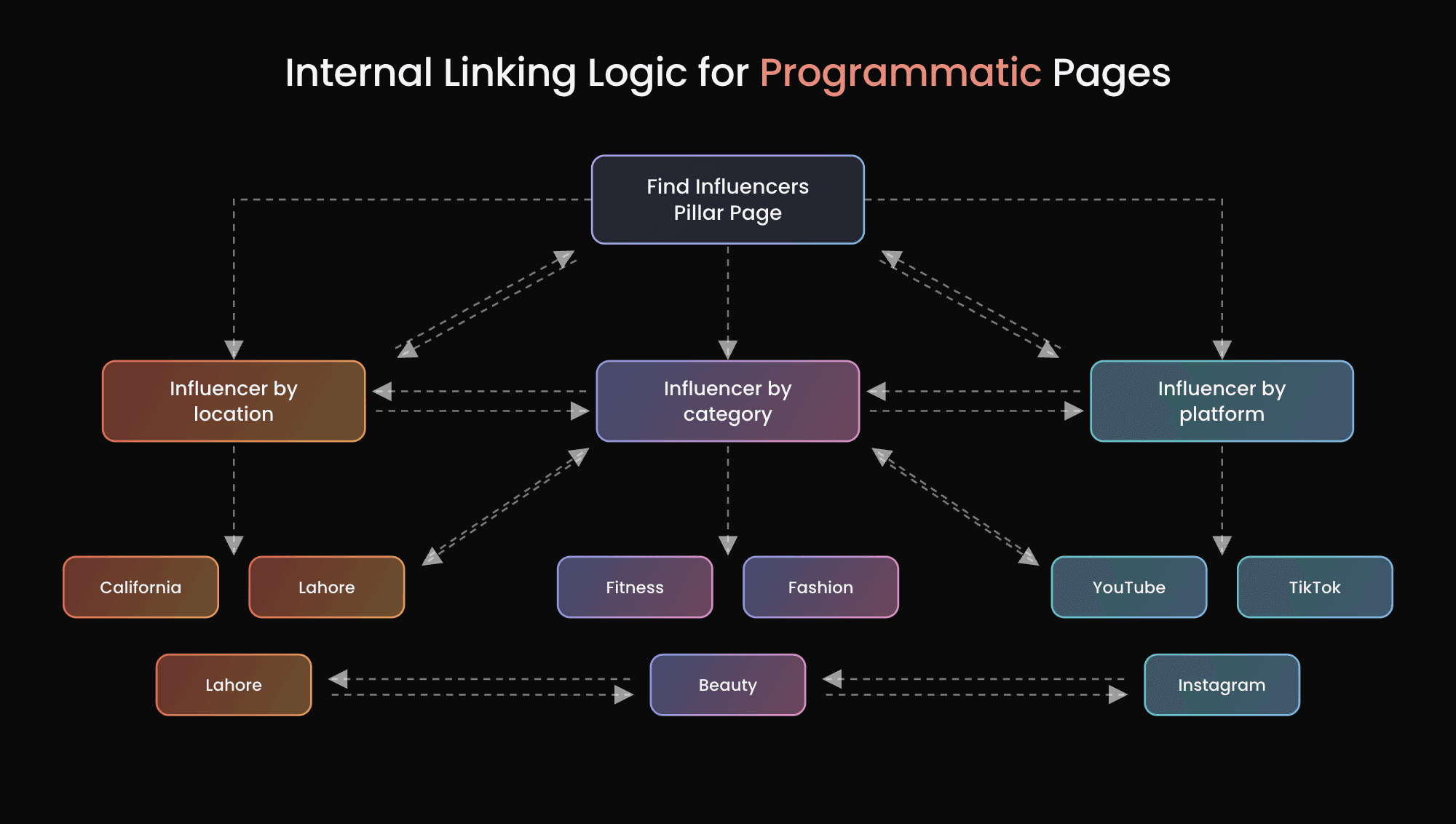
Internal linking logic connecting the pillar page to location, category, and platform hubs.
Integrated vertical & horizontal linking from a revamped footer design for programmatic pages. Here’s what the footer looked like before and after:
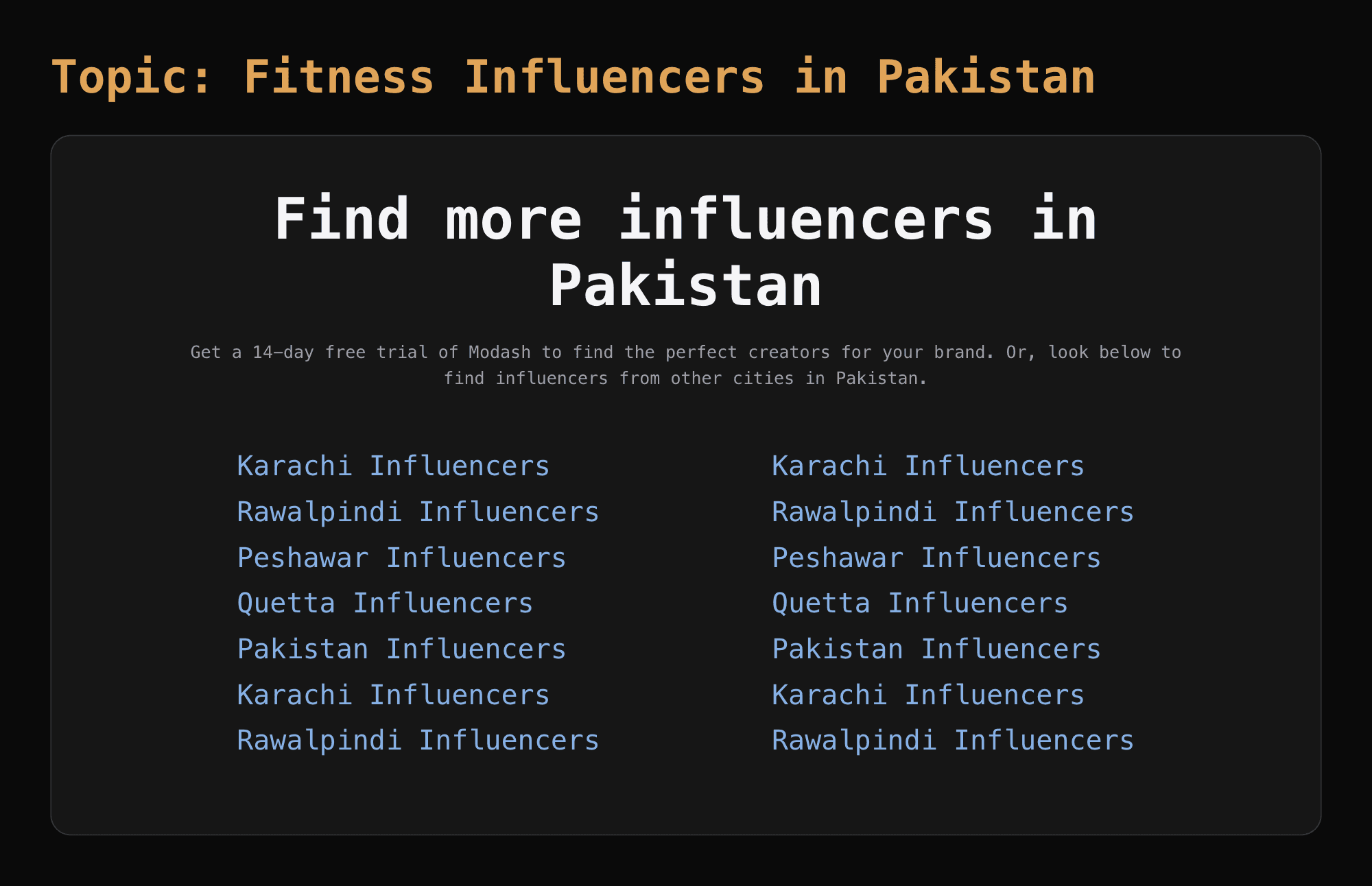
Before — a single location-based link list in the programmatic page footer.
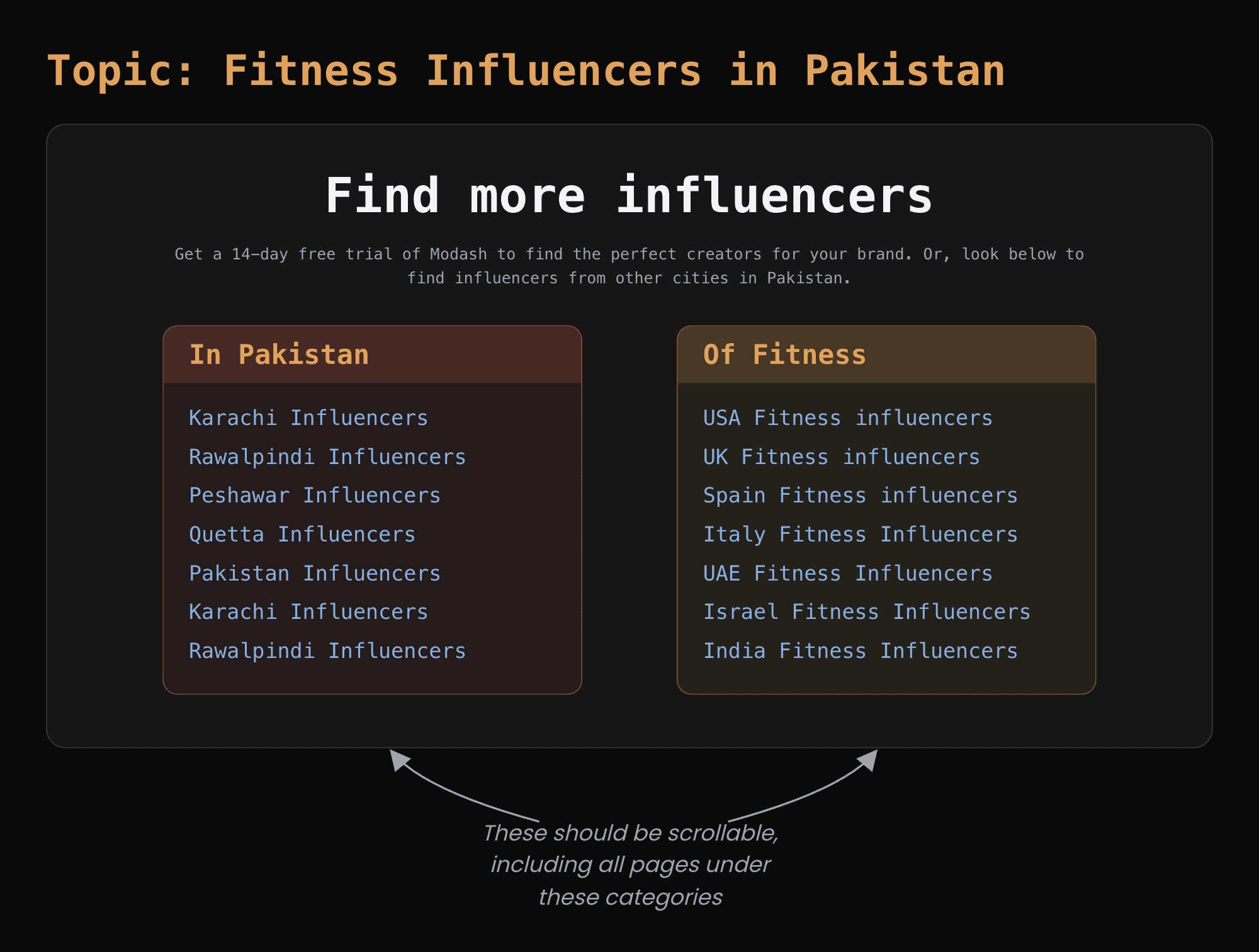
After — scrollable location and category columns creating both vertical and horizontal links.
Outcome:
Stronger internal signals to search engines.
More pages indexed & ranked faster.
Step 3: Improving Content Experience on Programmatic Pages
We optimized how influencer data was displayed to better meet search intent and improve engagement.
Key improvements:
Added new data points to influencer listing cards:
YouTube: added subscriber growth rate, top-performing videos, and audience demographics.
Instagram: added average Reels plays, engagement growth trends, and top-performing Reels.
TikTok: added average views per post, growth rate, and keyword-based topics.
Revamped page design to improve readability and information accessibility. Here’s what the design of the cards looked like before and after on the pages:
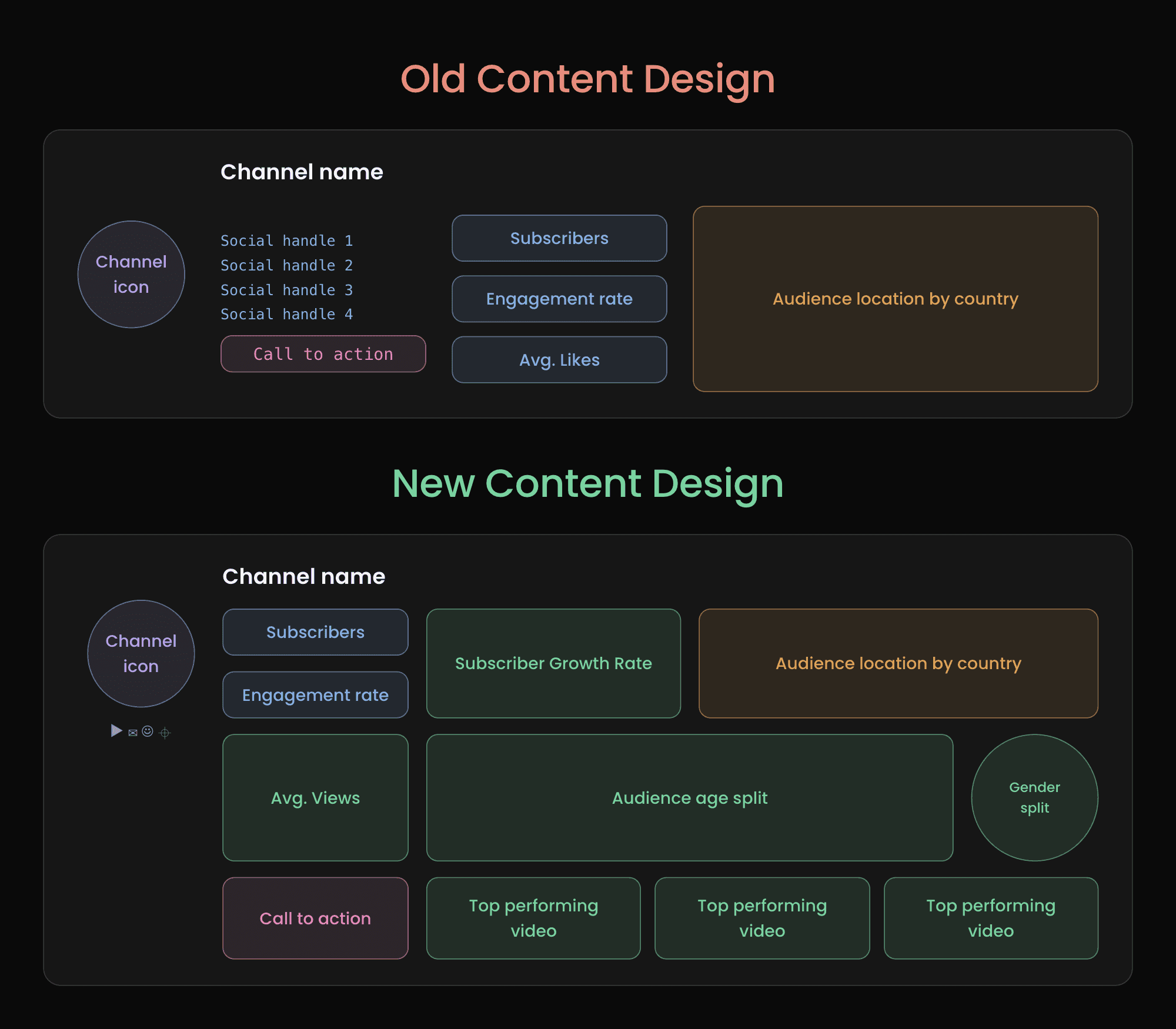
Card layout redesign — before and after.
This is what the final version of the design layouts and insertion of additional data points looked like on the live pages:

The redesigned influencer cards live on the programmatic pages.
Outcome:
Increased time on page & engagement rates.
Improved search relevance & rankings.
Step 4: Strengthening Editorial Content with SME-Driven Insights
While programmatic SEO was the primary focus, we also refined the editorial content strategy to drive additional organic growth.
Action taken:
Interviewed Subject Matter Experts (SMEs), influencer marketing managers at e-commerce brands, to gather deep buyer pain points.
Built a content plan based on first-hand insights, aligning customer problems with search demand.
Worked closely with writers to craft content briefs that balanced:
Customer insights & pain points
Search intent & ranking competitiveness
Outcome:
Higher reader engagement and search performance for blog content.
Greater topical authority within influencer marketing for e-commerce.
The Results: Strong Growth in Search Traffic & Inbound Deals
Programmatic SEO Growth
Search traffic increased by 96% in 8 months (starting from a 6-figure traffic level).
Inbound deals sourced by the pSEO pages 2X’ed.
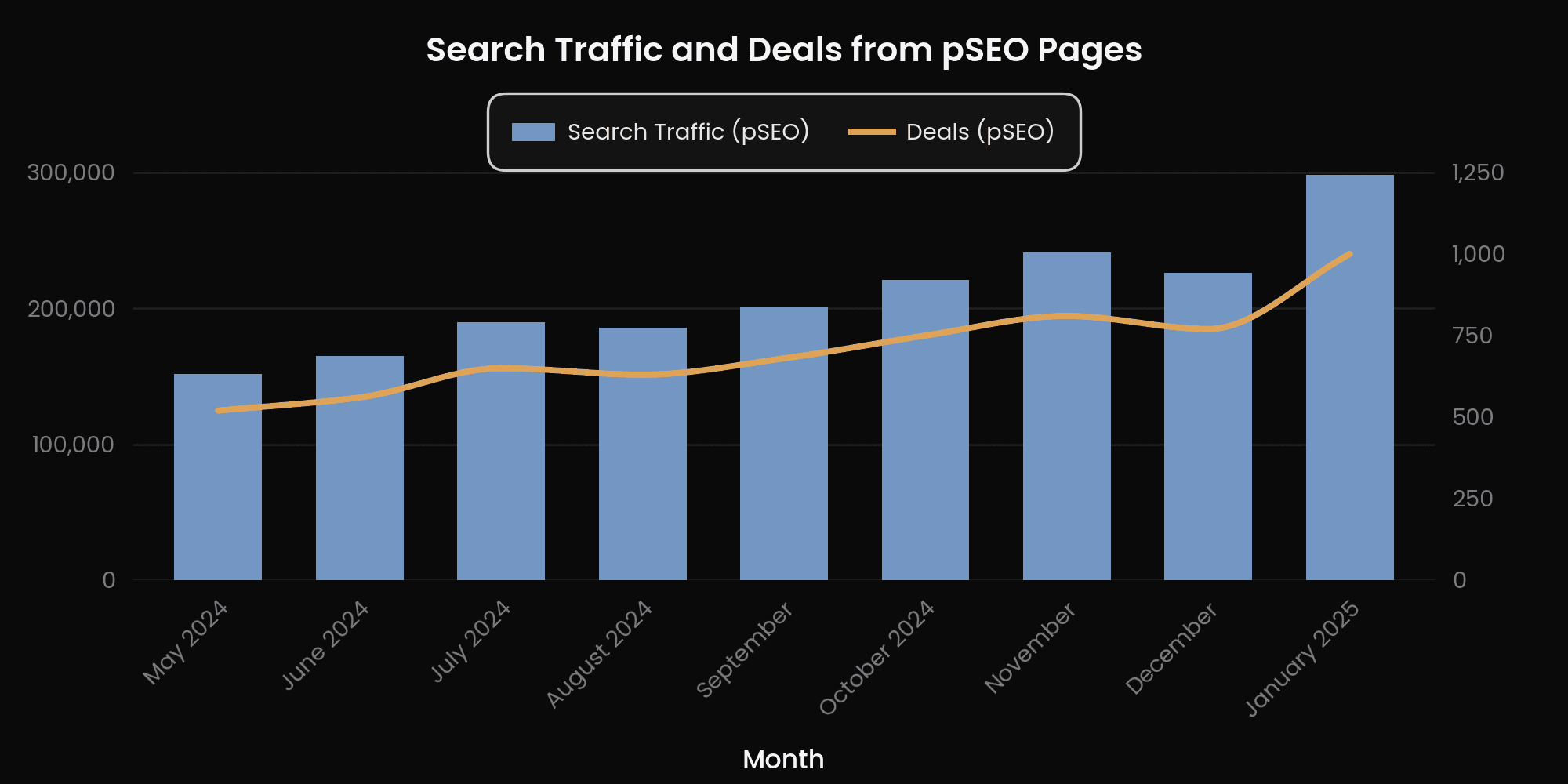
Search traffic and deals from programmatic pages across the engagement.
Editorial Content Growth
Search traffic for the blog specifically increased by 24% (starting from a 5-figure traffic level) and also saw a 24% increase in deals attributed to the blog.
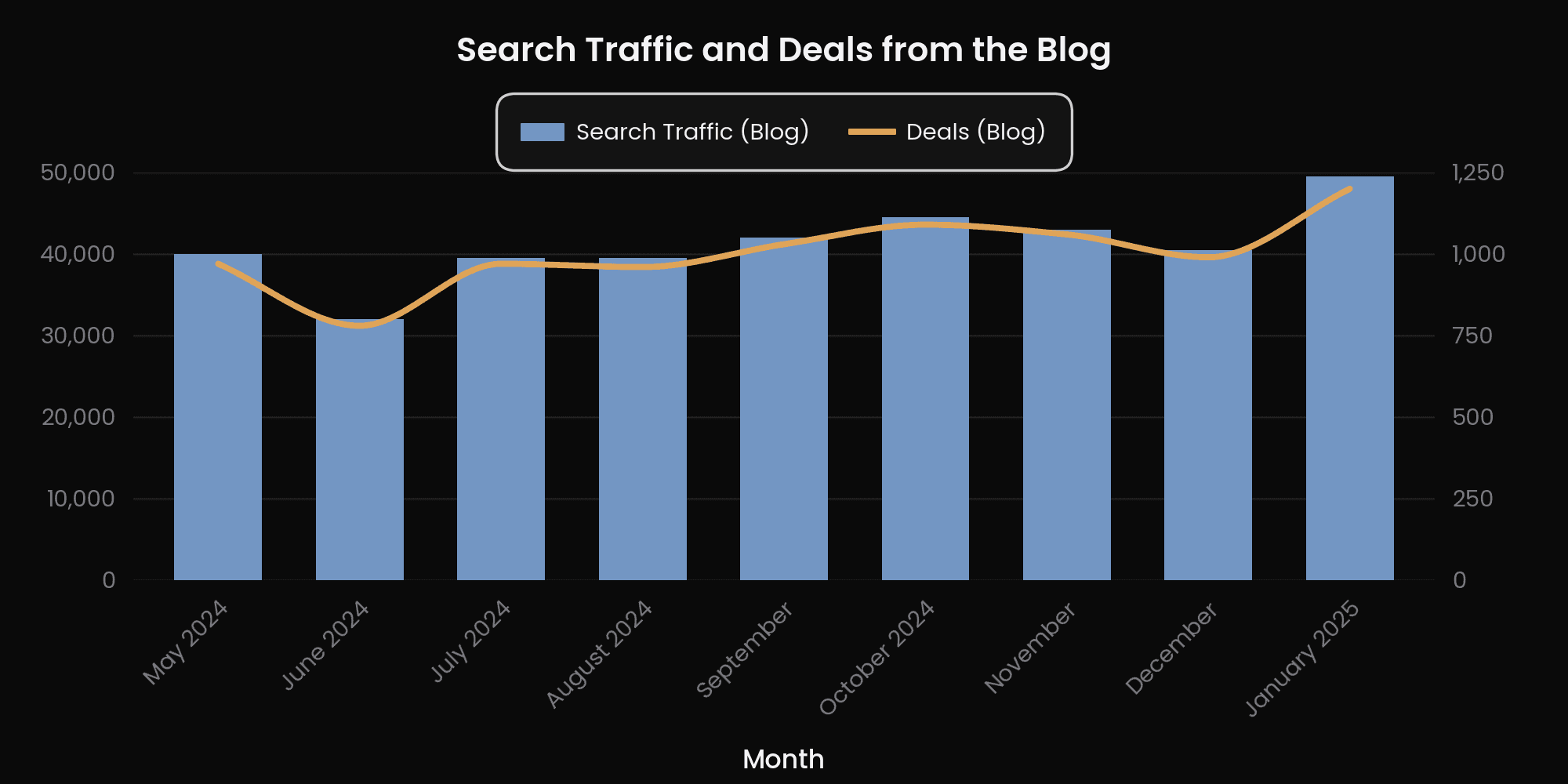
Search traffic and deals from the blog across the engagement.
What Modash said about the engagement
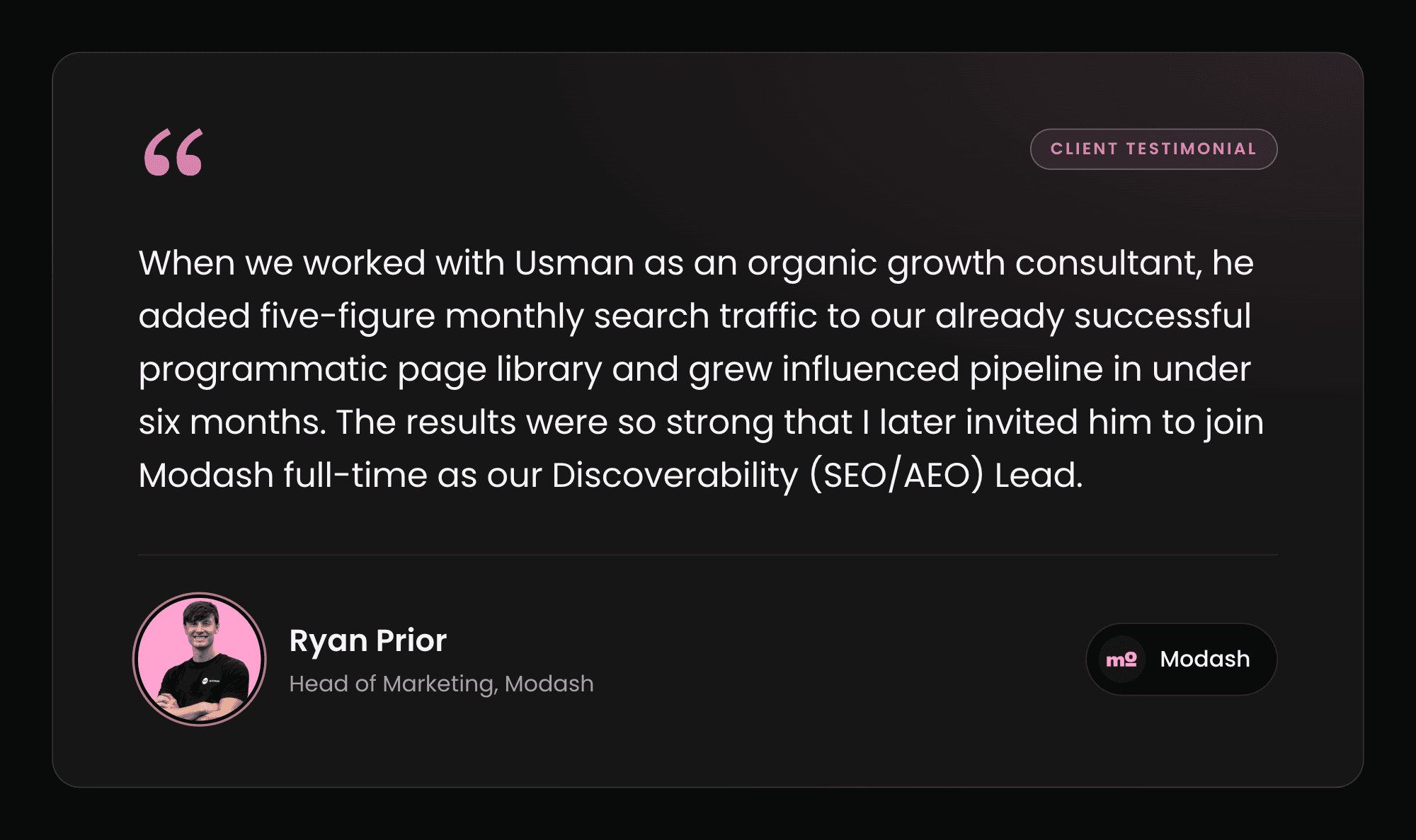
Here’s what Ryan Prior, Head of Marketing at Modash, said about the results:
Conclusion: A Scalable SEO Engine for Modash
Through a targeted, high-leverage SEO strategy, Modash unlocked a new level of organic growth.
By doubling down on programmatic SEO, refining internal linking, improving content experience, and optimizing editorial strategy, we helped:
Increase search traffic & inbound deals.
Improve rankings for high-value pages.
Build a scalable SEO framework for continued success.
As Modash continues to grow, this SEO foundation will support long-term, sustainable traffic & conversion growth.